

Focus Keyword: vat savitri vrat 2026
The sacred festival of Vat Savitri Vrat 2026 is one of the most spiritually meaningful occasions for married Hindu women in India. Observed with deep devotion, this vrat (fast) symbolizes unwavering love, marital bliss, and the longevity of one’s husband. Rooted in ancient mythology, the festival beautifully blends rituals, traditions, and cultural expressions—especially the art of mehndi (henna), which enhances the festive spirit.
This detailed guide explores the significance, rituals, regional celebrations, and trending mehndi designs associated with Vat Savitri Vrat 2026.
The Mythological Story Behind Vat Savitri Vrat


The origins of Vat Savitri Vrat lie in the legendary tale of Savitri and Satyavan. According to Hindu mythology, Savitri was a devoted wife whose husband Satyavan was destined to die within a year of their marriage. On the foretold day, as Satyavan collapsed under a banyan tree, Savitri followed Yama, the god of death, and through her intelligence and devotion, convinced him to restore her husband’s life.
The banyan tree (Vat Vriksha) became a sacred symbol of eternal life and marital strength, which is why women worship it during this vrat.
When is Vat Savitri Vrat 2026?


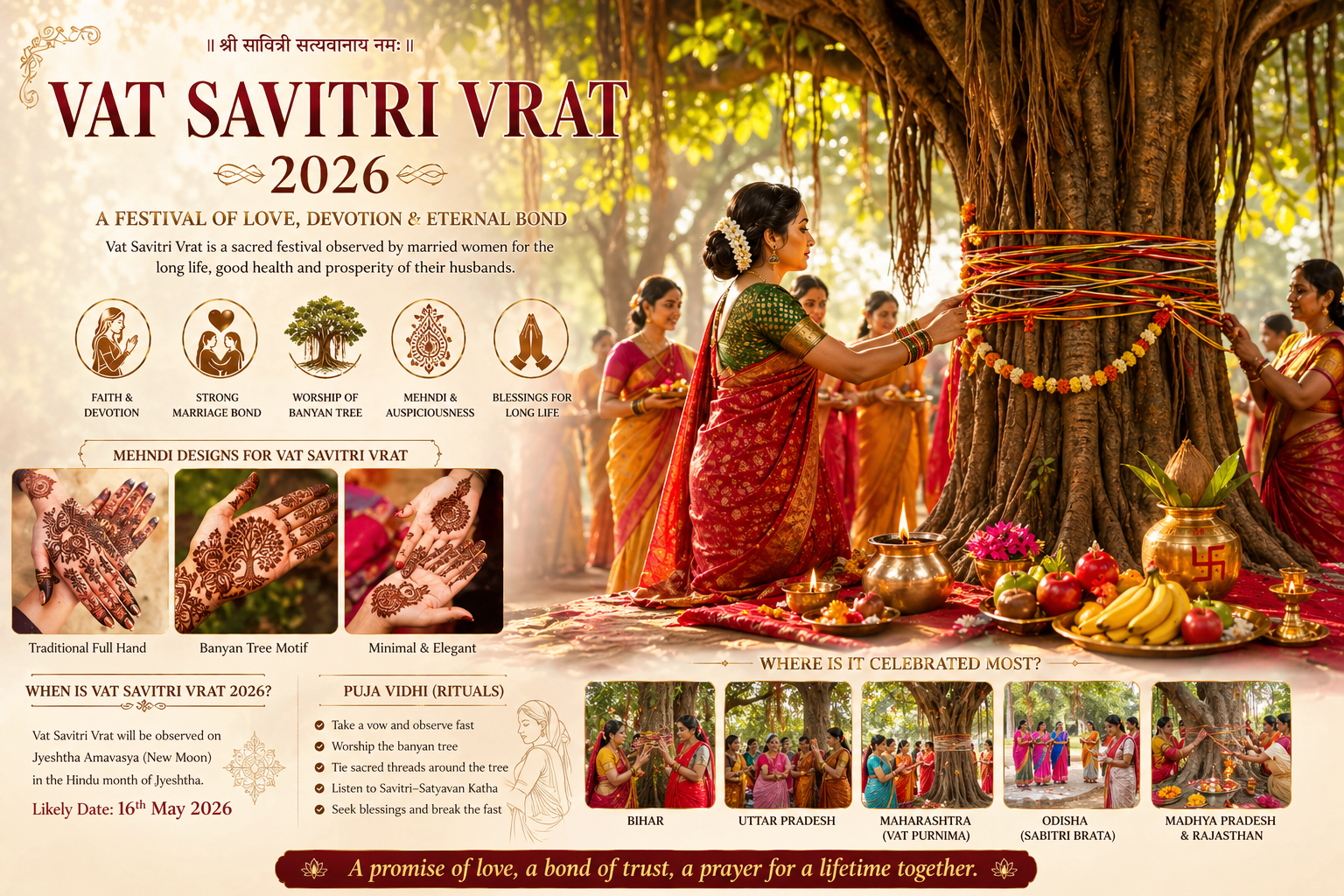
In 2026, Vat Savitri Vrat will be observed on Jyeshtha Amavasya (new moon day in the Hindu month of Jyeshtha). The exact date typically falls in May or June, depending on the lunar calendar.
Women begin preparations days in advance—buying puja items, choosing sarees, and applying mehndi.
Puja Vidhi (Rituals) of Vat Savitri Vrat


The rituals of Vat Savitri Vrat are deeply symbolic and performed with devotion:
1. Early Morning Preparation
Women wake up early, bathe, and wear traditional attire—usually red, yellow, or green sarees, symbolizing prosperity and fertility.
2. Sankalp (Vow)
They take a vow to observe a day-long fast for the well-being and long life of their husbands.
3. Banyan Tree Worship
Women gather near a banyan tree and:
- Offer water, milk, flowers, and fruits
- Tie sacred threads (kalava) around the trunk
- Circumambulate the tree (parikrama) while chanting prayers
4. Listening to the Vrat Katha
The story of Savitri and Satyavan is recited or listened to in groups.
5. Breaking the Fast
The fast is usually broken after sunset, often after seeking blessings from elders.
Mehndi Tradition on Vat Savitri Vrat 2026


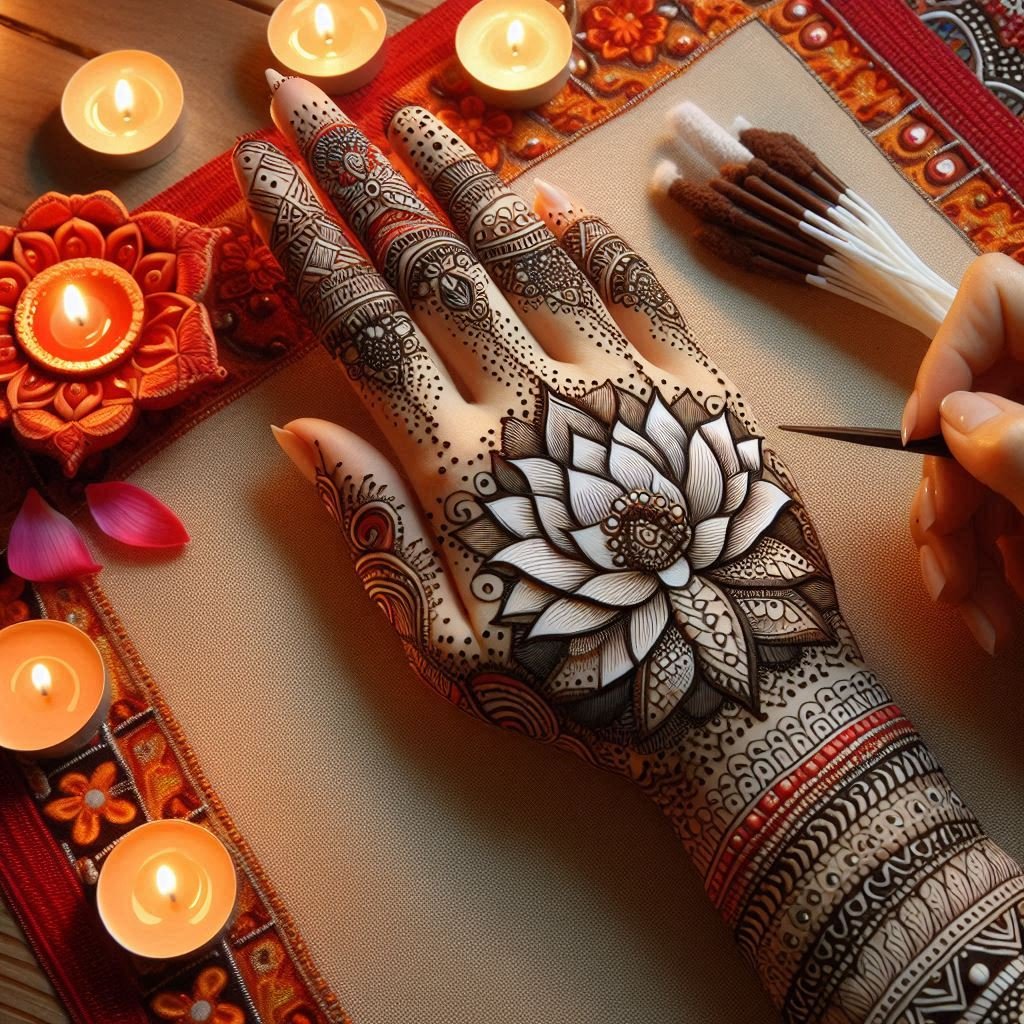
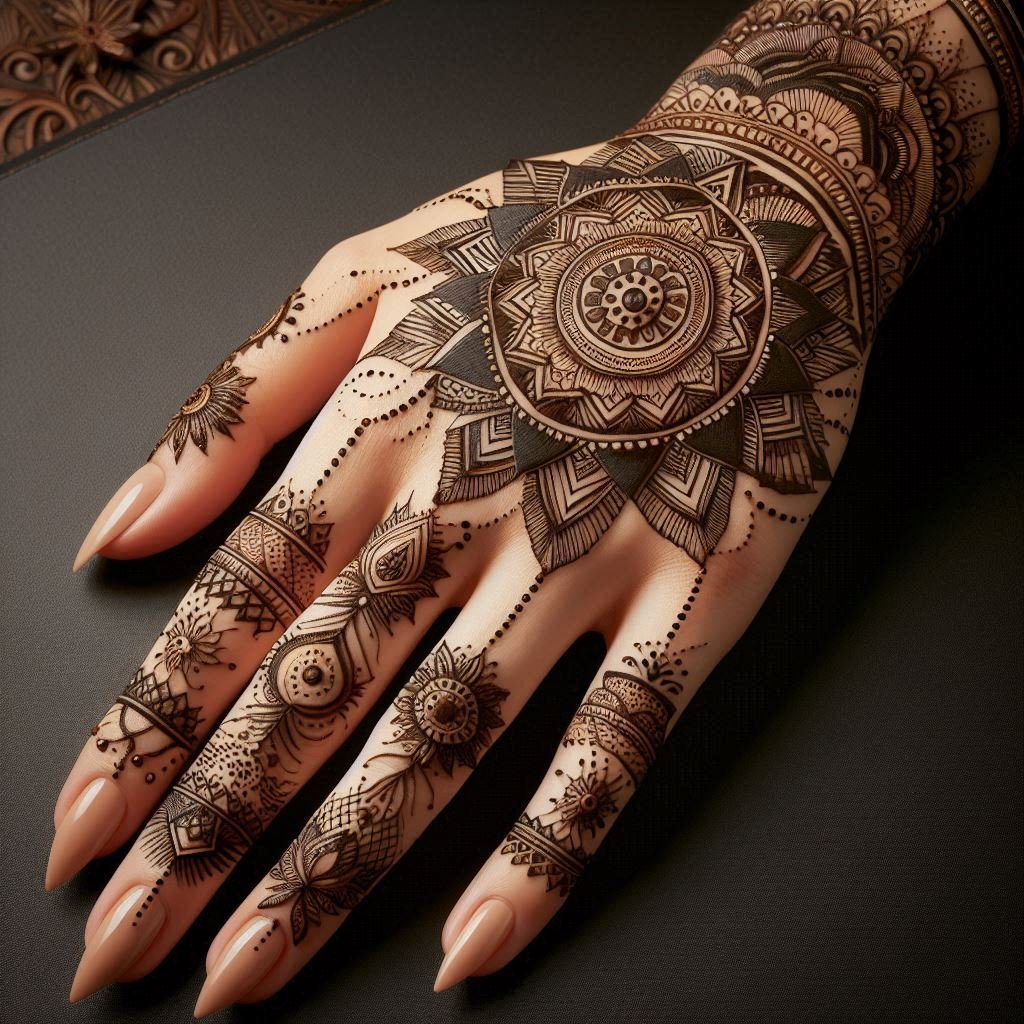
Applying mehndi is an essential part of Vat Savitri Vrat. It is considered a symbol of love, beauty, and auspiciousness.
Why Mehndi is Important
- Represents marital happiness and devotion
- Enhances festive appearance
- Believed to bring good fortune
Popular Mehndi Design Styles
- Traditional Floral Patterns – Classic and elegant
- Banyan Tree Motifs – Inspired by the festival’s symbolism
- Full Hand Bridal Designs – For newly married women
- Minimal Arabic Patterns – Trendy yet graceful
Women often apply mehndi a day before the vrat so the color develops deeply—symbolizing stronger love and bonding.
Regional Celebrations Across India


Vat Savitri Vrat is celebrated across various regions in India, each with unique customs:
Bihar & Uttar Pradesh
Highly popular in rural and urban areas. Women gather in groups, sing devotional songs, and perform rituals together.
Maharashtra (Vat Purnima)
Known as Vat Purnima, observed on the full moon day instead of Amavasya. Celebrations are grand, with elaborate rituals.
Odisha (Sabitri Brata)
Women observe strict fasting and prepare special offerings like fruits and sweets.
Madhya Pradesh & Rajasthan
Celebrated with traditional attire, jewelry, and community rituals.
Modern Trends: Mehndi & Celebration Style in 2026


In 2026, Vat Savitri Vrat is embracing modern aesthetics while retaining tradition:
- Minimal Mehndi Designs are trending among young women
- Fusion Patterns combining Arabic and Indian styles
- Social Media Celebrations with aesthetic photoshoots
- Designer Sarees & Jewelry Styling
This fusion of old and new keeps the festival relevant across generations.
Significance of Vat Savitri Vrat in Modern Life


Even in today’s fast-paced world, Vat Savitri Vrat holds deep emotional and cultural value:
- Strengthens marital bonds
- Encourages devotion and discipline
- Preserves cultural heritage
- Promotes family unity
It is not just a ritual but a celebration of love, commitment, and faith.
FAQs About Vat Savitri Vrat 2026
1. What is Vat Savitri Vrat?
A Hindu fasting ritual observed by married women for their husband’s long life and prosperity.
2. When is Vat Savitri Vrat 2026?
It falls on Jyeshtha Amavasya, likely in May or June 2026.
3. Why is the banyan tree worshipped?
It symbolizes longevity, stability, and eternal life.
4. Can unmarried women observe this vrat?
Traditionally, it is for married women, but some unmarried women observe it for a good future partner.
5. Is fasting compulsory?
Yes, most women observe a strict fast, though practices may vary.
6. What should be included in the puja thali?
Fruits, flowers, diya, incense sticks, thread, sindoor, and sweets.
7. Why is mehndi applied?
It symbolizes love, beauty, and auspiciousness in marriage.
8. What are the best mehndi designs for this vrat?
Floral, banyan-inspired, bridal, and minimal Arabic designs.
9. How long does the fast last?
Usually from sunrise to sunset.
10. Is Vat Savitri Vrat celebrated all over India?
Yes, especially in Bihar, Uttar Pradesh, Maharashtra, and Odisha.